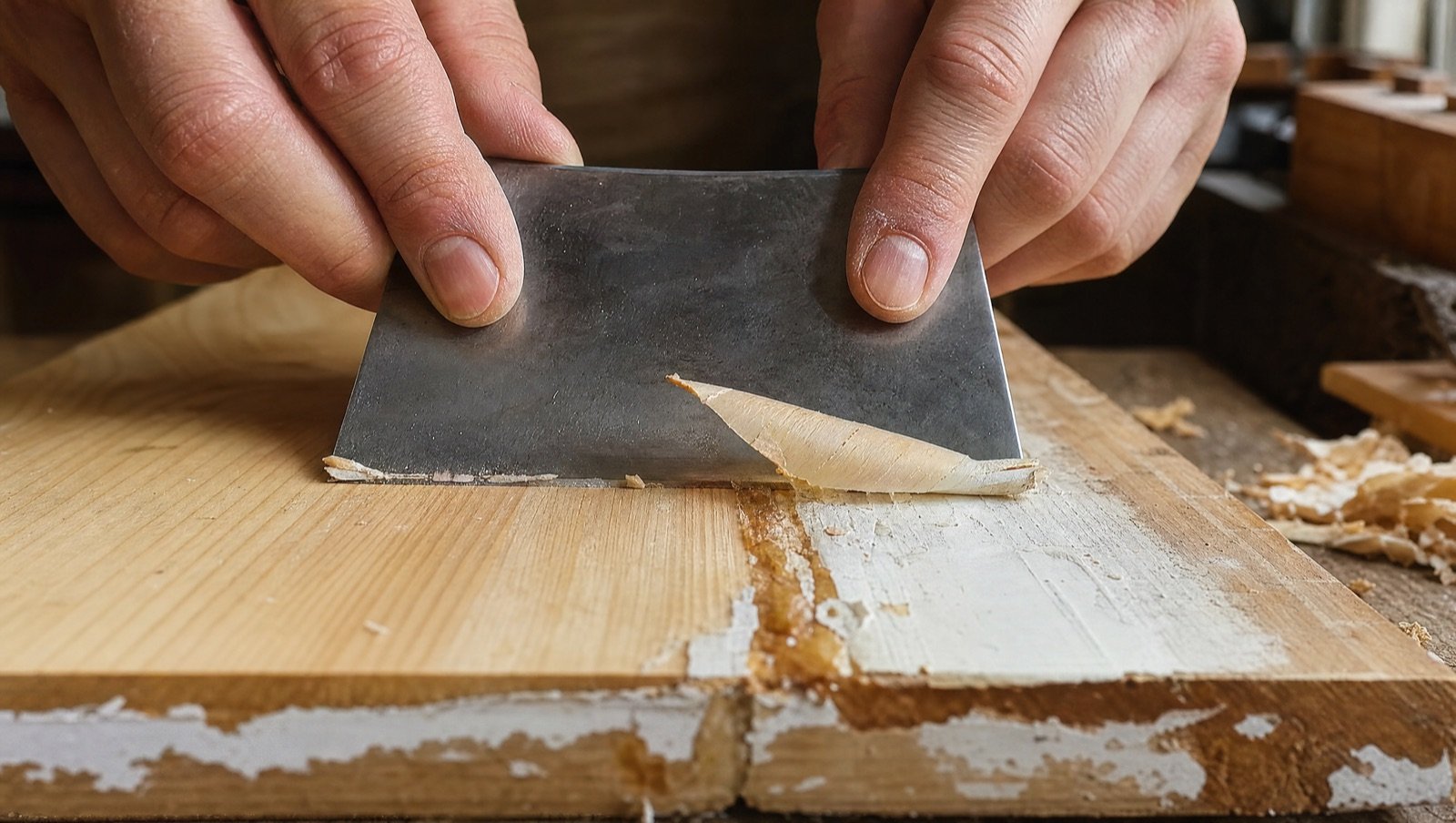
Sandpaper clogs quickly on soft pine, on old enamel and on glue that has oozed out of a joint. A cabinet scraper slices off a fine shaving rather than grinding that residue into the grain.
When it's worth reaching for
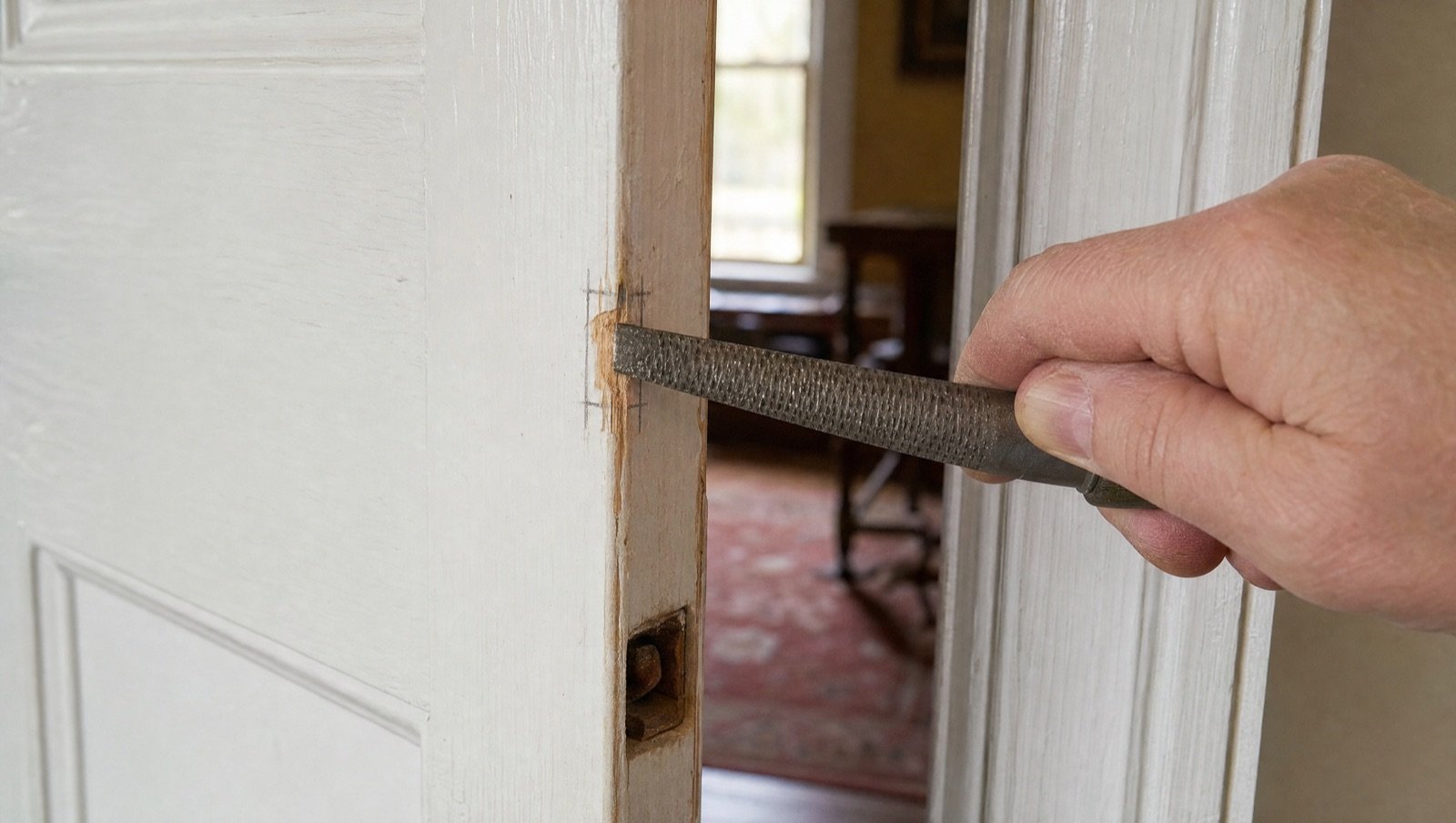
- A ridge of paint along a skirting or architrave after a messy cut-in.
- Glue that has dried proud of a joint, where sanding would smear it into the pores.
- A face that needs to be flat enough to take a finish without rounding over the arris.
The hook does the cutting
For a flat face, a rectangular scraper such as the Pax set is the standard shape. A burnisher rolls the edge into a tiny hook — without that hook, a scraper only polishes. If you don't own a burnisher yet, the Accu-Burr is in the catalogue. Check the maker's notes on the card for the steel you bought; the right hook angle varies from scraper to scraper. Both are under Scrapers.
Hold the scraper with both thumbs near the middle, flex it slightly and push or pull at a low angle. A bright curl means the hook is working. Dust means the edge is dull, or you're holding it too upright.
On thick, rubbery acrylic that hasn't fully cured, a scraper will skate. Let the paint harden, then take the ridge off. It's a finishing tool — not a way to strip a failed coating from a whole wall.