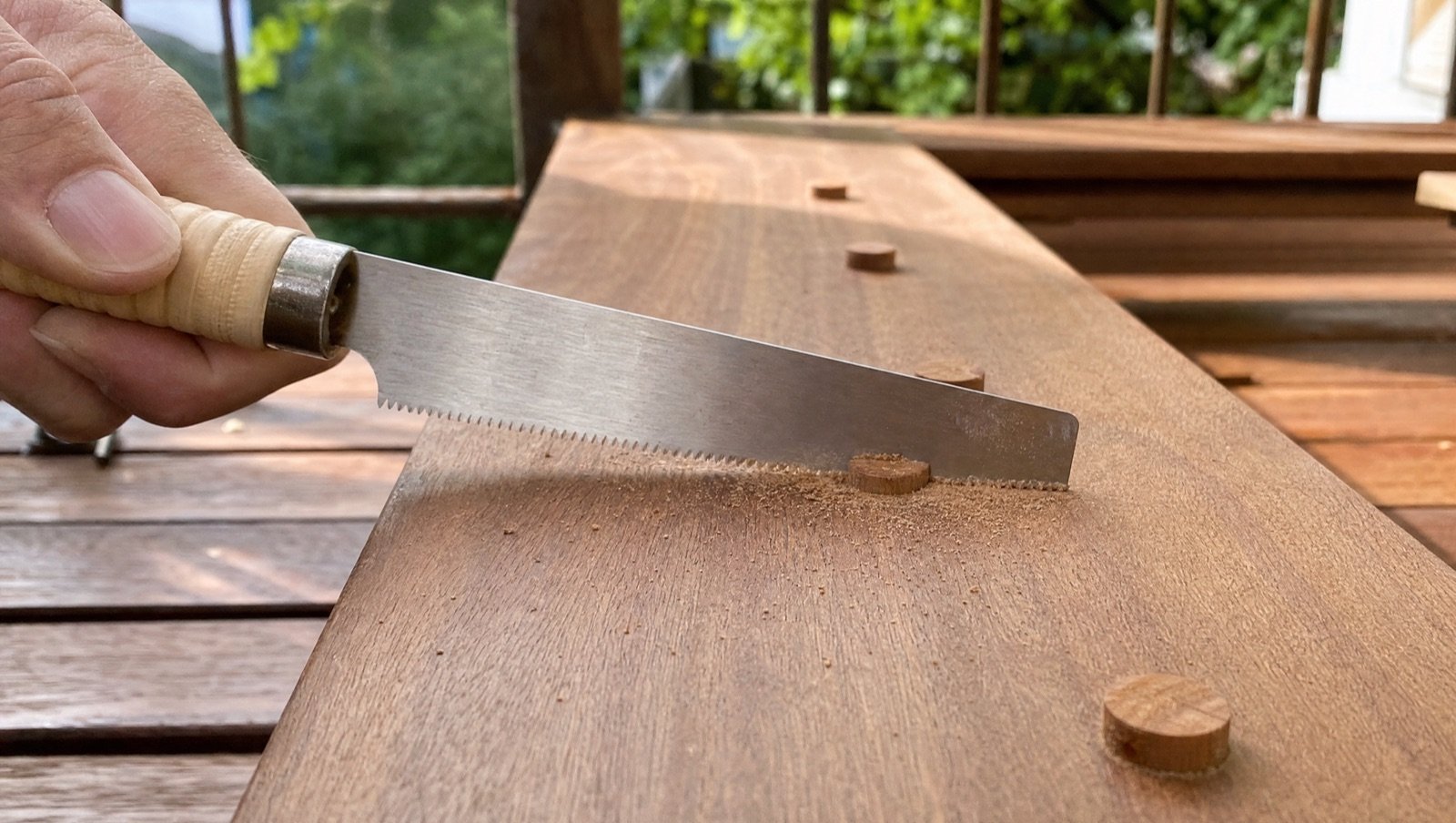
A plug or a dowel sitting proud of a finished surface is a small job that a circular saw will ruin. On a flush-cut saw the teeth are set to one side only, so the flat of the blade can ride on the timber and leave the surface around the plug untouched.
What it's actually for
- A timber plug over a screw that sits a millimetre or two high.
- A dowel in a chair, a gate or a repaired stile that needs trimming once the glue has set.
- A proud brad you'd rather cut off than punch through a finished face.
The Japanese flush-cutting saw and the Nakaya Kugihiki in our catalogue are stocked for exactly this. Tooth pattern and set differ between makers, so read the card before you buy. Any maker's warranty stays with the maker. The full range is under Saws.
Keeping the face clean
- Steady the blade so it doesn't jump on the first stroke. With a Japanese pull saw, cut on the pull.
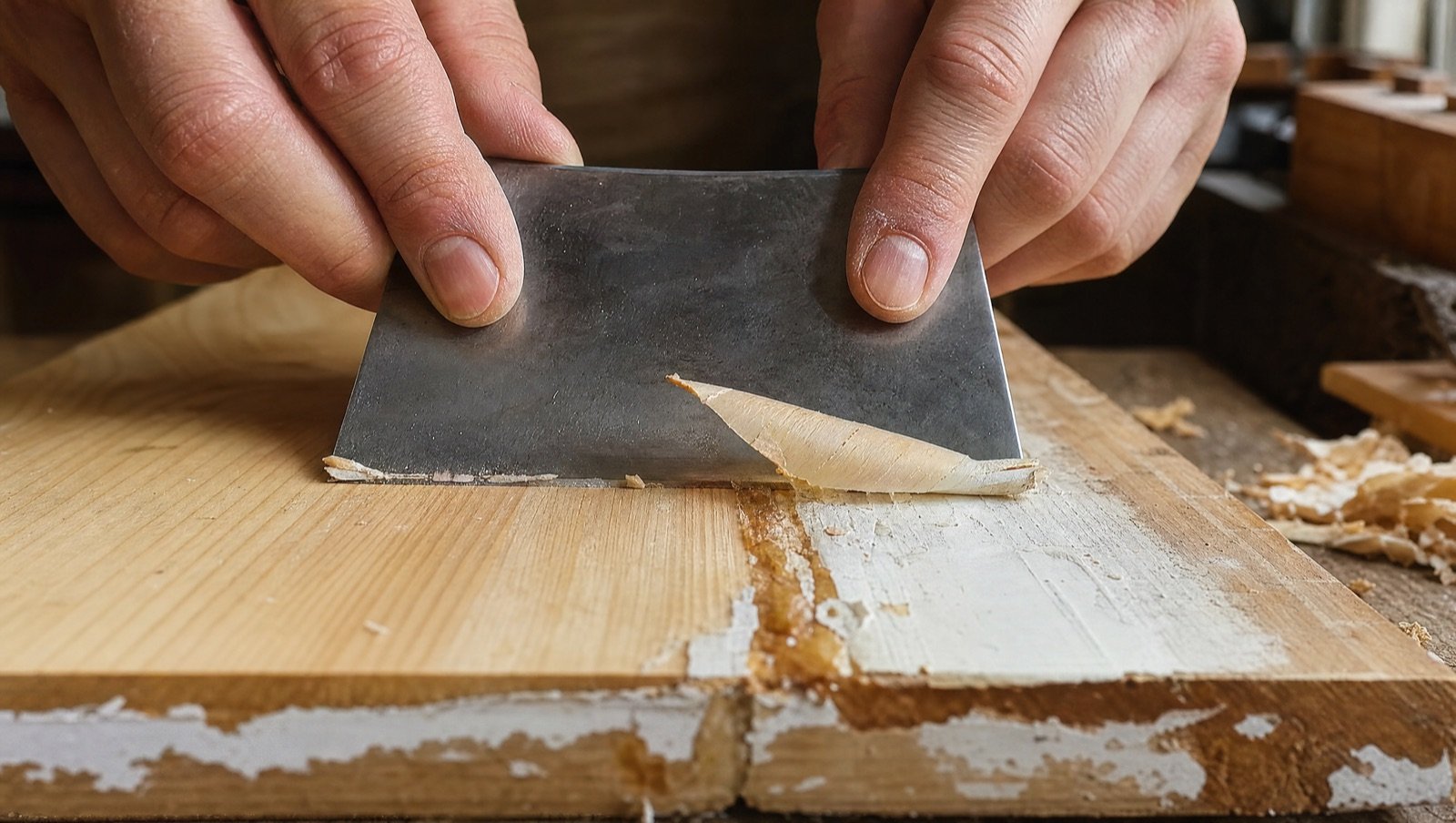
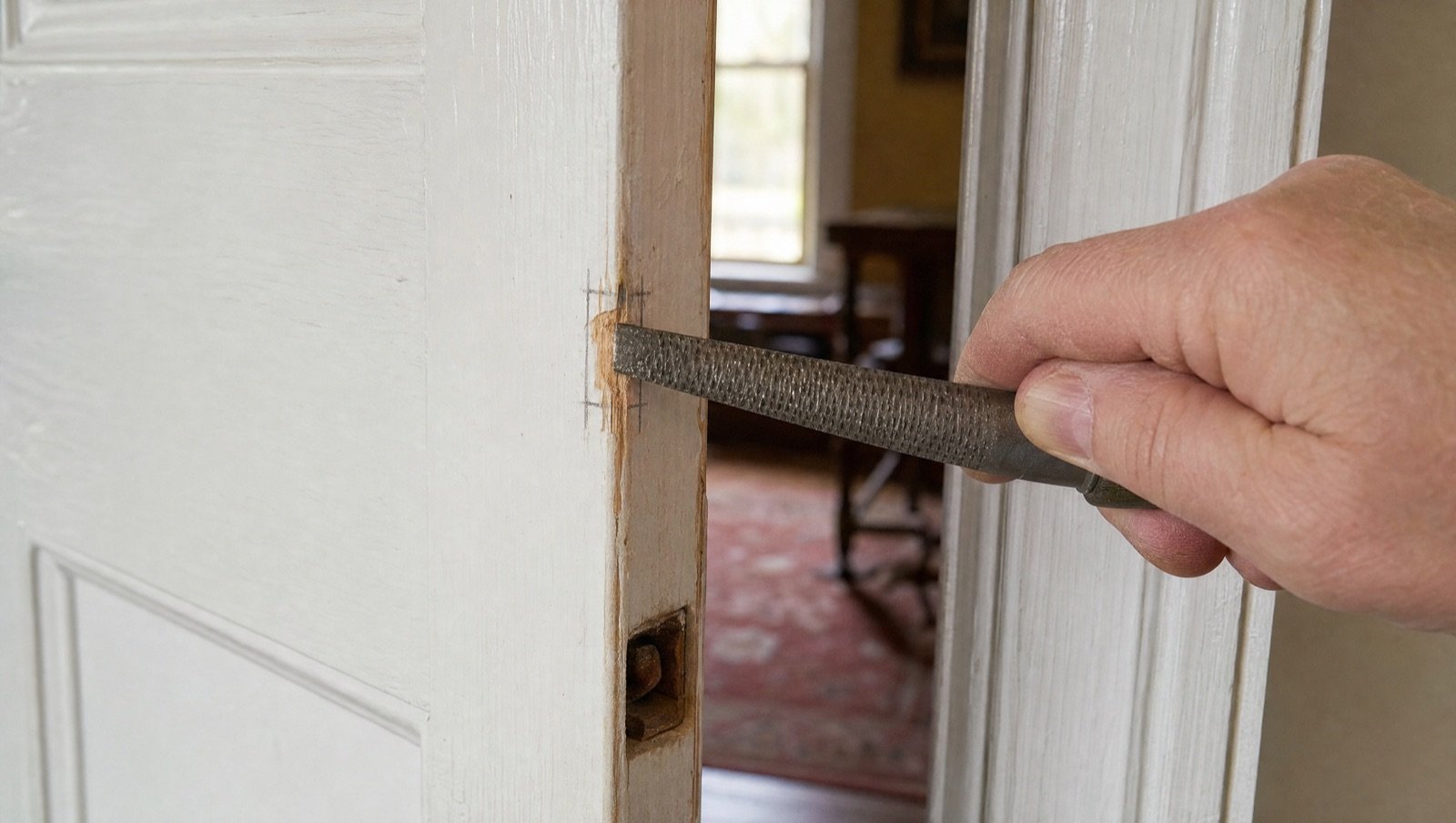
- Stop as soon as the teeth just touch the surface. A scraper or a fine file takes the last whisker without digging a hollow.
- On a painted architrave, slip a strip of card under the blade to protect the paint if the set is aggressive.
A flush-cut saw isn't a crosscut saw. It wanders in a deep cut, and the teeth clog in wet tanalised timber. To cut a board to length, use a carpenter's saw or a mitre box.