Houses move with the seasons. A door that shut fine in summer can swell and bind in a damp winter, then loosen again once the heating dries it out. Before you plane the whole edge, find the high spot.
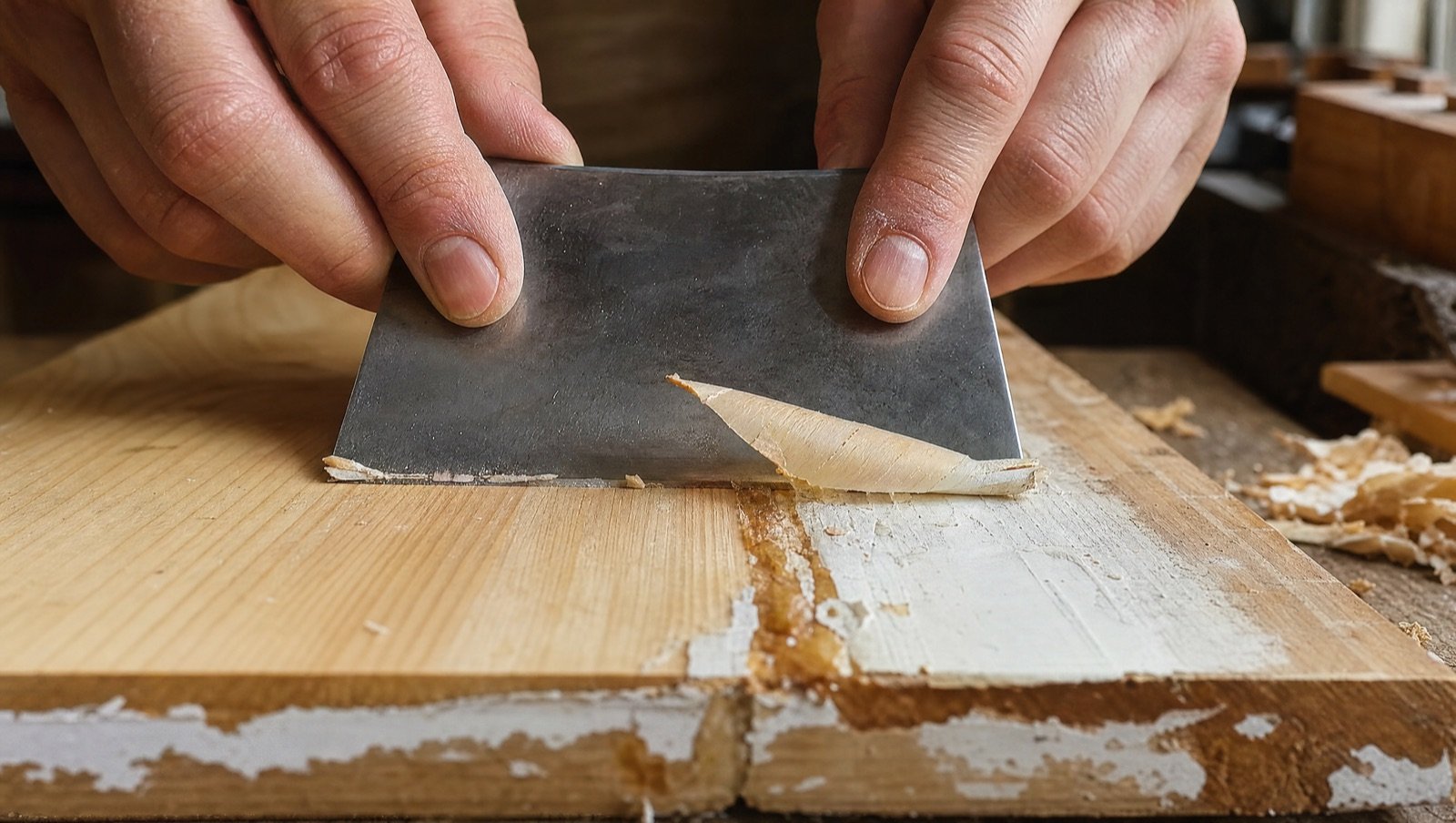
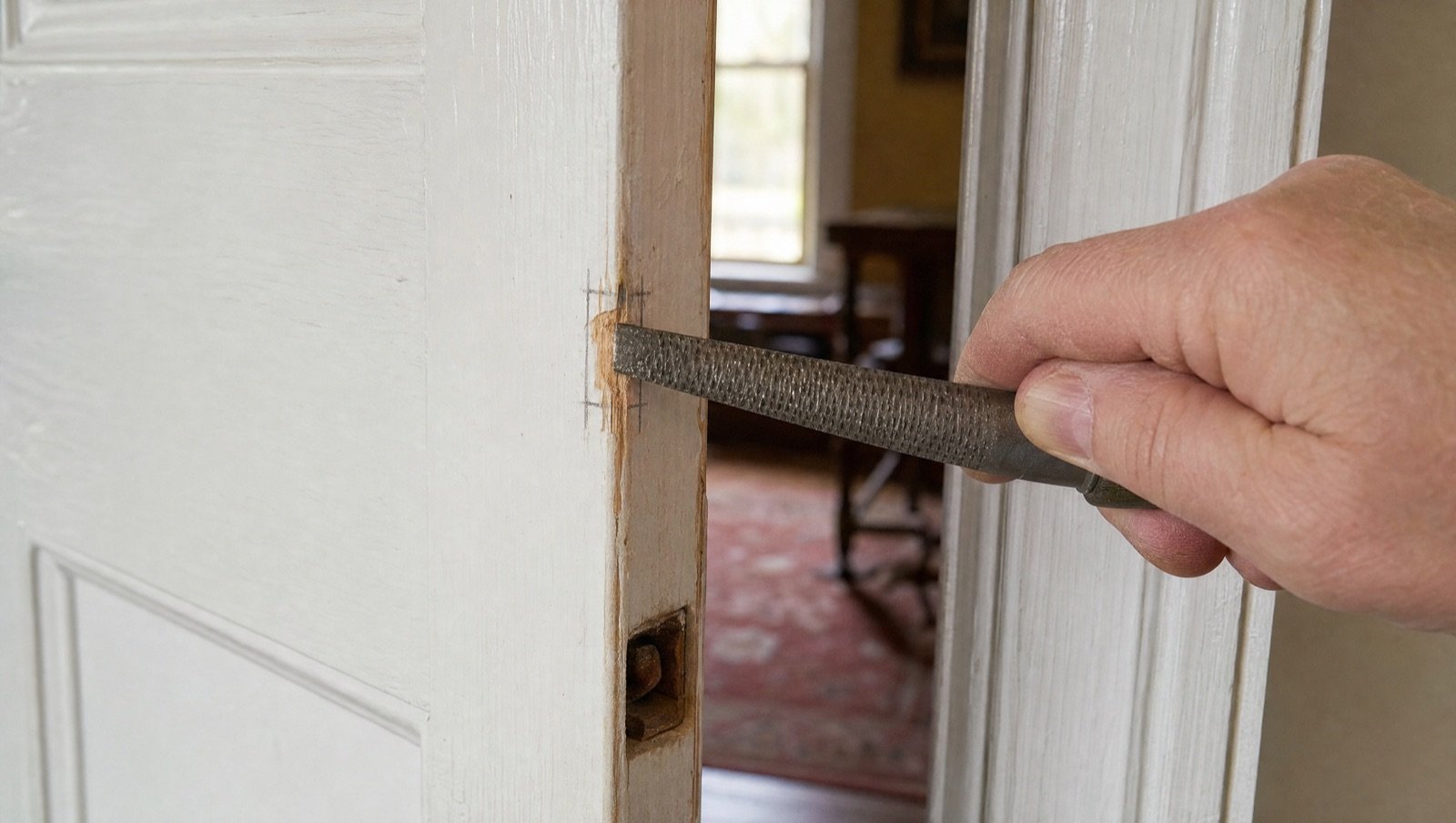
Close the door on a strip of paper, or look for the shiny rub mark in the paint. That mark is the only place that needs material taken off. A rasp or a file removes it without the tear-out a plane can leave on a painted edge, and without filling the hallway with belt-sander dust.
A few strokes, then test
Work outward from the high spot, then close the door again. Stop when a sheet of paper slides through with light drag. Keep going until the door swings free in summer and it will rattle in winter.
Where the rub usually shows
- Top corner against the head jamb — often seasonal swelling in the door or the head.
- Latch side, near the strike — the door has dropped on its hinges. Tightening or packing the hinge screws often fixes it before any timber comes off.
- Bottom edge — usually a new floor or a swollen threshold, not a reason to attack the latch stile.
Sometimes a sticking latch is the strike plate, not the door, so check that before you take a rasp to the edge. Our files and rasps, including Carbatec sets and a Topman saw rasp, are under Files & rasps. If the jamb is rotten, the hinge screws won't hold in the timber, or it's a fire door — stop. That isn't a job for a file.